Guides / October 29, 2026
Fragnesia Kernel Flaw and the DFARS Incident Clock
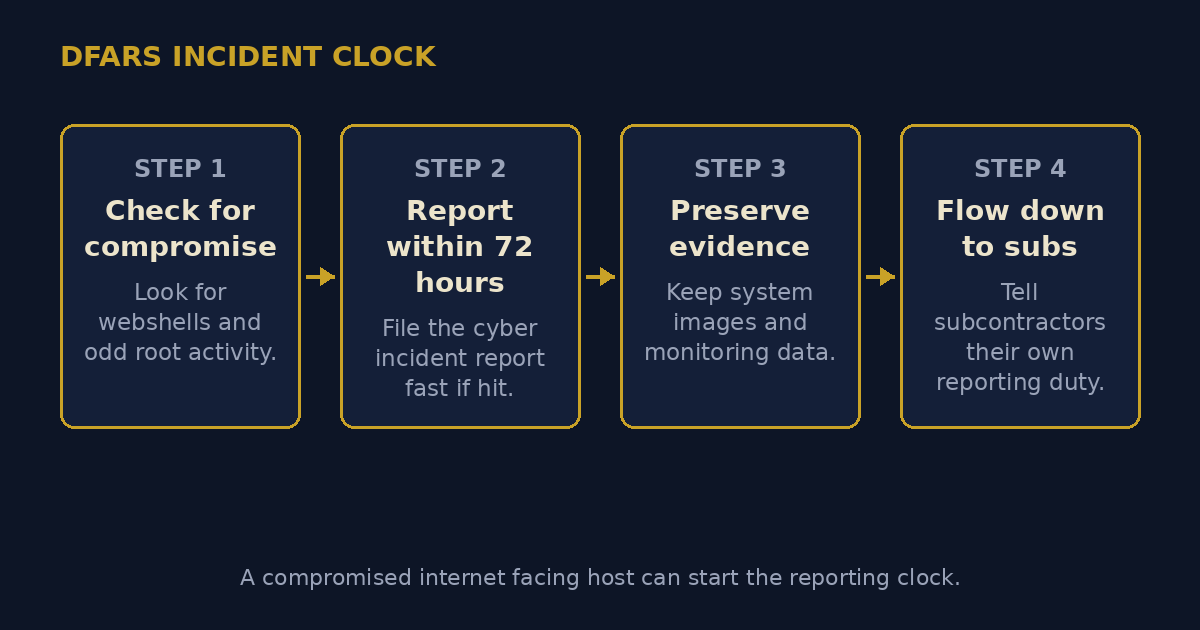
A compromised internet facing host can start a reporting clock. The Fragnesia listing is a good time to check that clock. Do not wait for proof of compromise to learn it.
The flaw in plain words
The Cybersecurity and Infrastructure Security Agency (CISA) added a Linux kernel flaw to a catalog on October 28, 2026. The catalog is the Known Exploited Vulnerabilities (KEV) catalog. A KEV listing means CISA has evidence of active exploitation. The record is CVE-2026-46300. Common Vulnerabilities and Exposures (CVE) is the record system for public flaws. The score is 7.8 under Common Vulnerability Scoring System (CVSS) version 3.1. CISA lists a due date of October 31, 2026. CISA states ransomware campaign use is unknown.
Why the clock matters here
CISA states the flaw chains with CVE-2026-109618 and CVE-2026-109619 to plant PHP webshells and run commands as root. Researchers at Dream reported such a chain against 25 servers on October 23 and 24, 2026. Credential extraction and Active Directory enumeration were reported. A webshell on a host that holds covered defense information is not a patch ticket alone. It is a possible cyber incident. The contract clause is DFARS 252.204-7012. It requires a cyber incident report to DoD within 72 hours of discovery. It also requires preservation of system images and monitoring data.
The four steps to have ready
First, confirm which hosts run a vulnerable kernel and which hosts run PHP. Fixed kernel builds start at 5.10.257 and run through 7.1 and later. PHP2Shell patches arrived on October 21, 2026. Use PHP 8.5.12, 8.4.27, 8.3.36, or 8.2.35 for your line. Second, check each exposed host for webshells and odd root activity. Third, if your review finds a compromise, start the 72 hour report clock at once. Preserve images and logs before patching wipes them. Fourth, tell subcontractors about their own reporting duty. Flow down is part of the clause, not an extra courtesy.
Palo Alto Networks issued a separate vendor advisory. It states active exploitation has been observed for CVE-2026-109618 and CVE-2026-109619 on internet exposed management interfaces. Restrict management access to trusted internal addresses. Dream did not name a firewall vendor in its report. Keep the two reports separate in your notes.
PolicyCortex does not patch the kernel or PHP. PolicyCortex helps teams link proof to requirements.
Sources
- CVE-2026-46300 record, CVE Program, score 7.8
- National Vulnerability Database (NVD) record for CVE-2026-46300
- CISA alert, CISA adds two known exploited vulnerabilities to catalog, October 28, 2026
- CISA Known Exploited Vulnerabilities catalog, entry added October 28, 2026, due October 31, 2026
- Palo Alto Networks advisory for CVE-2026-109618, active exploitation observed
- CVE-2026-109619 record, CVE Program
- Original diagram by PolicyCortex
Next step
Check each exposed host for compromise, then patch, reboot, and record the running version.